A sound deal needs more than a strong company. The sponsor's interests and the share rights must also suit the family and its other holdings. This process draws on public sources; the signed terms and the facts of each deal govern the result.
Family Office Co-Investment Checklist
A sound deal needs more than a strong company. The sponsor's interests and the share rights must also suit the family and its other holdings.
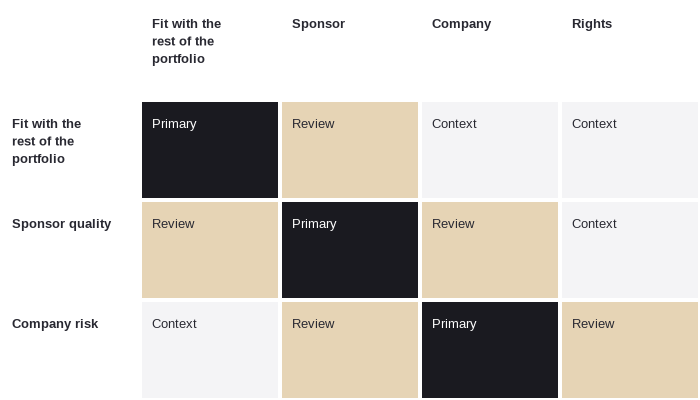
View chart data and assumptions
| Review area | Fit with the rest of the portfolio | Sponsor | Company | Rights |
|---|---|---|---|---|
| Fit with the rest of the portfolio | Primary | Review | Context | Context |
| Sponsor quality | Review | Primary | Review | Context |
| Company risk | Context | Review | Primary | Review |
The Decision Begins Before the Offer
A trusted manager can bring a deal, but the family's return still rests on the company, price and terms. The sponsor's interests matter after closing too. The family must weigh these against its other holdings to see whether the deal adds a useful stake or more of the same risk.
FINRA's guide calls for checks on both the issuer and the offer. The family needs to assess the business, then trace what it would receive from the shares or other security on offer.
The documents are connected. NVCA lists five core financing documents for many venture rounds. A right that appears attractive in the term sheet may be qualified elsewhere in the same transaction.
An offer may arrive on Friday with an answer due early the next week. If review roles and the minimum evidence are already agreed, the team can use that short window to assess the company and terms. Otherwise, part of the deadline is spent deciding who does the work.
1. The Effect on the Family Portfolio
For a family with $500 million to invest, putting 2% into one deal means $10 million at risk. At 3%, that sum rises to $15 million. Stating the possible loss in dollars makes it easier to judge than the percentages alone.
The family's stakes through funds and other vehicles add to its direct holding. Together, they show whether the proposed cheque serves a new purpose or adds to a risk already held.
The loss the family can bear helps set its first cheque. A later round at a higher value can then make that stake a larger share of private NAV. Its weight in the portfolio rises even though no cash has come back.
2. Why the Sponsor Wants a Co-Investor
The sponsor's terms help show whether it shares the family's risks and rewards. Those terms may run across 5 linked core documents in the NVCA model set. Checking the full set can reveal limits on a right that looks strong in the term sheet alone.
The sponsor may share a round that is too large for its main fund. The company may also want a shareholder who can help the business. Comparing the lead's price, rights and cash at stake with the family's offer helps test that explanation.
A reference helps more when it describes a tough period. How did the sponsor handle missed targets or an urgent need for cash? That record shows what support the family could expect when plans go wrong.
3. The Company's Need for More Capital
In Q2 2024, Carta reported a record median gap of 856 days between Series A and Series B, roughly 2.3 years. A company may need a bridge round if its cash runs out during that wait. The family should therefore compare the funding gap with the company's runway.
The cash plan depends partly on customers continuing to pay. The review needs to show what problem the product solves and why customers stay. Those facts reveal more about the strength of sales than a long list of market figures.
The burn rate determines how long the company has to reach the milestone for another financing. If cash runs out first, an interim round becomes part of the investment case. The current cheque may therefore be only the beginning of the funding path.
4. How the Security Determines the Return
In Q1 2026, the US median Series A pre-money value was $62 million, and the median deal size was $19.6 million. These figures give market context, but the family's stake comes from its own deal. The price and cash raised set the share it owns after the round.
That share of the company is only part of the return. In a weak exit, some holders may be paid before the family. Later rounds may also dilute its stake, so both payment rights and future funding affect what it keeps.
SPV fees and carry can leave the family with less than the lead investor receives. The entry price needs a similar check. A discount helps only if the last round still reflects the business and the rights of the shares being bought.
5. The Risk of Adverse Selection
An invitation alone does not show the manager's faith in a deal. Its main fund's stake and exposure limits help explain why it wants co-investors. They may reveal a strong deal being shared or risk being moved away from the fund.
6. What Follow-On Funding Could Require
The first cheque may be one of several before the company can fund itself or exit. Each later cheque needs a fresh case based on progress and the new terms. Without that review, the wish to protect the first investment can become the main reason to invest again.
Skipping a later round can shrink the family's stake or change its rights. If that round is also weak, an exit may take longer. The family can then face a lower value and a longer hold together.
Decision Memo Checklist
- What does the position add to the total portfolio?
- What evidence backs the sponsor's case for the deal?
- What will the family own, and what rights come with it?
- What is the adverse case, and can the office absorb a full loss?
- Who must send reports, how often are they due, and which terms require them?
The memo should explain why the deal fits, what could go wrong and who will track it after closing. The guides to private tech co-investments and co-investments versus funds place those checks in the wider portfolio.
Adobe-Figma: Closing Risk After a Signed Deal
The proposed $20 billion Adobe-Figma sale appeared to offer an exit in 2022. In December 2023, the parties ended the deal. They had concluded there was no clear path to approval from regulators.
Adobe planned to pay in cash and stock. This gave Figma's holders a route to exit, but only if the deal closed.
The price came with figures for the business. Expected annual recurring revenue, or ARR, was more than $400 million. Net retention was above 150%, adding context for the sales outlook.
The price and business metrics did not ensure the deal would close. With no clear route to approval, the parties ended the agreement. Each company continued on its own.
Even a signed sale can depend on consent, funding and other closing terms. The agreement sets what happens if it fails. Until the sale closes, the company may still need cash to keep running on its own.
Primary sources: Adobe's plan to buy Figma (2022); Adobe and Figma end the deal (2023). This example comes from public records. It does not describe a Frontierspace deal or return.
Frequently Asked Questions
What is the main portfolio risk in a family office co-investment?
Too much money in one company is usually the main risk. The family must add its direct stake to those held through funds and other vehicles. Together, they may form a large share of private NAV, the reported value of its private assets.
How should a family office evaluate the co-investment sponsor?
The sponsor's stake, terms and reason for sharing the deal show how its interests match the family's. References from tough periods then help test what support it will give after closing. Its name alone cannot answer those questions.