The Existing Portfolio Gives the Review Context
A venture fund ties up cash the family may also need for public assets, property or its own businesses. Even a strong manager can be a poor fit if those needs clash. Reviewing the cash needs created by venture commitments helps the family test that fit.
Goldman Sachs' 2025 family office survey found an average of 42% in alternatives, with 21% in private equity. A new venture fund adds to those holdings. Its risk must be weighed with what the family already owns.
A closed-end private fund often runs for about 8 to 12 years. During that wait, the family may want to buy a business, give money to charity or pay family members. These plans can compete with the fund for the same cash.
The Purpose of the Allocation
The Goldman Sachs survey reported averages of 31% in public equities, 42% in alternatives, and 21% in private equity. This shows how that group held its wealth. The family's own assets still decide what a new venture fund could add.
One family may want early-stage technology it cannot buy in public markets. Another may seek a manager with deep knowledge of its own business sector. That purpose shapes the stage and fund size it chooses, as well as how many managers to back and when.
The investment policy turns that purpose into limits on how much to invest and how long cash can be tied up. It also sets a pace for new commitments. The committee can then judge each manager against the same plan.
What Does “Access” Actually Mean?
For Carta's 2019-vintage funds, year-end 2025 TVPI ranged from 1.33x at the median to 3.01x at the 90th percentile. The spread shows how much results can differ within venture. Choosing the asset class therefore leaves a second decision: which manager to back.
A real deal can show what the manager means by a special network. Trace how the relationship began, why the founder made room and what the team did. Those details reveal which parts of its access would be hard for another investor to copy.
A deal the manager declined can show the limits of its approach. Passing on a strong company at too high a price suggests judgment as well as access. Founder and co-investor references can then test whether that account matches what happened.
How an Opportunity Becomes an Investment
The NVCA counted 15,352 US venture deals and $320 billion of capital deployed in 2025. Only 487 megadeals represented 67% of value, although they were 3.2% of deal count. In a market that large, a high number of introductions says little by itself.
Follow a deal from first contact to closing to see how the team invests. Who built the relationship, what changed its view and why did it win a stake? Similar deals it passed on help show whether it used the same judgment across its pipeline.
Other deals from the same sources and decision steps provide evidence that the approach can work again. They turn an access claim into a process the family can assess.
The review should link each manager claim to records and references. Public sources can help, but the signed fund terms and the family's own needs determine whether to invest.
Family Office Fund Review
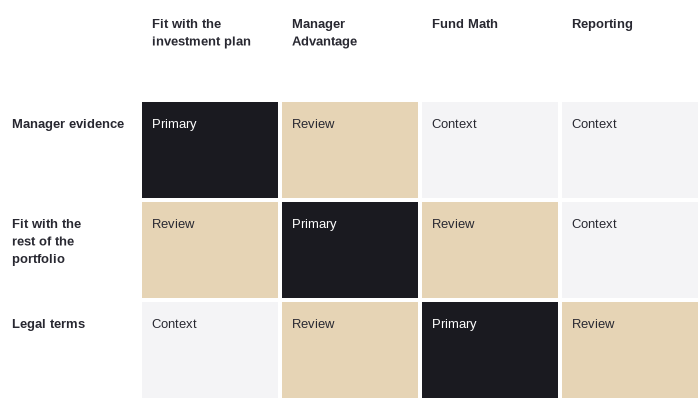
Link each manager claim to records and references that can support it.
View chart data and assumptions
| Review area | Fit with the investment plan | Manager Advantage | Fund Math | Reporting |
|---|---|---|---|---|
| Manager evidence | Primary | Review | Context | Context |
| Fit with the rest of the portfolio | Review | Primary | Review | Context |
| Legal terms | Context | Review | Primary | Review |
How the Fund Plan Adds Up
Carta's year-end 2025 sample covered 2,906 venture funds. Results varied widely across that group. The family therefore needs to test how each manager's proposed holdings could produce the return it seeks.
A $100 million fund backing 20 companies must pay for first cheques, reserves and fees from one budget. That limits the stakes it can buy and keep. A shortage of reserves may be clear before the family even judges the companies.
Follow-on cheques can put a large share of the fund into one company. Several winners may also need cash at once. Testing both demands shows whether the plan can work, without treating the calculation as a return forecast.
The Investment Case at Entry
A company can succeed even if the fund paid too much for its shares. The first memo shows the price, security and stake expected after dilution. Set that case beside the later result to judge the entry choice. A gain alone does not prove skill.
The later account may differ from the original memo. Check which assumptions held, which failed and what new facts changed the view. This separates the team's reasoning at the time from a story shaped by the result.
Who Shares the Risk and Reward?
The GP commitment puts the manager's cash beside the LP's. Its split shows which partners bear the risk. The people choosing deals should have a meaningful personal stake in how the fund performs.
A founder may keep most of the carry while newer partners find and manage deals. That split can make a handover harder. Fees also need to support the staff and systems promised to LPs. Together, these terms affect whether the firm can stay intact through the fund's life.
What a Quarterly Report Reveals
A real quarterly report shows how the manager explains its holdings. Cost and value show how each stake changed the account. The evidence behind a higher or lower mark then lets the family test how the manager values it.
When progress slows, useful reports explain missed goals and funding needs clearly. A regular schedule lets the family combine that news with reports on its other private holdings. It can then judge the cash and risk across them together.
The Companies Behind the Track Record
One large unsold stake can drive fund-level IRR and TVPI. Deal records show who found each company and how much value has become cash. They also help test whether the gains came from the strategy now offered.
That link matters when partners move firms or the next fund is much larger. A deal led by someone who left can lift past returns while saying little about today's team. Records and references show who did the work and whether it fits the new plan.
Years With Delayed Distributions
The legal term is not a distribution schedule. Companies may stay private longer than planned and funds may use extensions. Calls can therefore continue while exits slow across the rest of the family's portfolio.
Test a period with no payouts and greater need for follow-on cash. This shows whether the family can meet its promises without selling other assets under pressure. A smooth base case can hide that strain.
The Evidence Behind the Decision
- Is the target market clear enough to assess?
- Do deals, passes, references and deal records support the claimed edge?
- Do cheque sizes, target stakes, reserves and company count fit the fund's budget?
- Has the team's entry judgment held up in different markets?
- Who funds the GP stake, and do their actions match the risk they claim to share?
- Can the fund's results be rebuilt from each company's figures?
- How much of the reported gain has come back as cash?
- Do reports give enough detail to track cash, risk and the value of each stake?
The Written Investment Case
The memo brings these findings together to explain the choice:
- why the fund fits the portfolio;
- which evidence supports the manager's claimed edge;
- how the fund mathematics hold together; and
- which risks remain unresolved.
A larger final fund, a key departure or weaker reporting rights can change the decision. So can a portfolio plan whose maths no longer works. Agreed limits provide a basis for later reviews.
Frequently Asked Questions
What should a family office examine first in a venture fund?
Existing private holdings, cash needs and the risk budget set the room for another fund. The approval process must help the people making that choice weigh these together. That makes the review more dependable.
How many venture funds should a family office use?
Several managers can own the same companies, so their names alone do not show how risk is spread. Compare the stages, sectors, regions and vintages beneath them. Too many funds can also leave each stake too small to affect returns or receive enough attention.