How Co-Investments Add to a Fund Programme
A fund relationship can bring access to a co-investment and better facts about it. The new stake still needs its own review of the business, shares and price. Its place in the family portfolio then sets how much to invest. The fund and co-investment guide explains the work each route creates.
Many families kept large private holdings while making a few changes, according to Goldman Sachs' 2025 report. A co-investment lets them choose a company to add. That choice also puts more of the family's wealth behind one business.
A co-investment may cost less than the familiar 2 and 20 fund structure. Those savings improve the case once the company and stake size fit. They cannot make an unsuitable deal worth buying.
An offer from a trusted manager gives the family a choice. It can value the relationship and still pass on a deal whose business, price or stake size fails its tests.
What the Extra Company Exposure Can Achieve
One family may know the sector through an operating business. Another may want more of a manager's strongest company, while a third may seek lower blended costs. These are different reasons to co-invest. A clear main purpose makes it easier to judge whether the deal delivers what the family wants.
| Use | Possible benefit | Main control |
|---|---|---|
| Focused conviction | More exposure to a company the family understands | Company and sector limit |
| Operating knowledge | Family can help with customers, hiring, or markets | Clear role and conflict review |
| Improve blended economics | Lower fee or carry in some vehicles | All-in cost and independent investment case |
The same deal can serve one family's goal and fail another's. Sector knowledge helps when it matches the company's actual needs. Lower fees help when the shares, price and rights already make a sound investment.
Ask why the manager is sharing the round. Its remaining fund stake and role on the board help show how much work it will keep doing. The family can then judge whether it is joining an engaged lead or mainly filling the last part of the raise.
How a Deal Can Affect the Core Programme
A popular deal can use cash meant for re-ups or later fund vintages. A separate co-investment budget makes that trade-off clear. It caps what the family can spend while leaving it free to pass on every deal that falls short.
A direct stake may look small on its own. Add the same company's stakes through the lead fund, other managers and personal vehicles. The total shows how much the family has riding on that business.
- Business: Do facts from customers support what the company claims?
- Security: What does the family own, and who receives cash first?
- Sponsor: How much is the lead investing, and what role will it play?
- Total stake: How much of this company does the family own through all its funds and vehicles?
- Follow-on: What would make the family put in more cash?
These rules affect which deals fit the programme. Their benefit appears in the quality of the completed investments, while deal count alone says little.
Why Preparation Matters Under a Deal Deadline
UBS found that 54% of surveyed US family-office portfolios was in alternatives. Private equity was 27% and real estate 18%. Those assets already demand time and cash. A new co-investment adds work to that existing load, often with little notice.
Agree who decides and what evidence they need before a live deal arrives. Ties with sponsors and other investors can then help the team obtain those facts. This preparation supports a well-founded decision to pass as well as to invest.
A co-investment can add a chosen company, deepen ties with a manager or draw on family knowledge. Each use still needs a limit on stake size. The cards have equal area; their size shows neither money invested nor expected returns.
Family Office Co-Investment Use Cases
A co-investment can add a chosen company, deepen ties with a manager or draw on family knowledge. Each use still needs a limit on stake size.
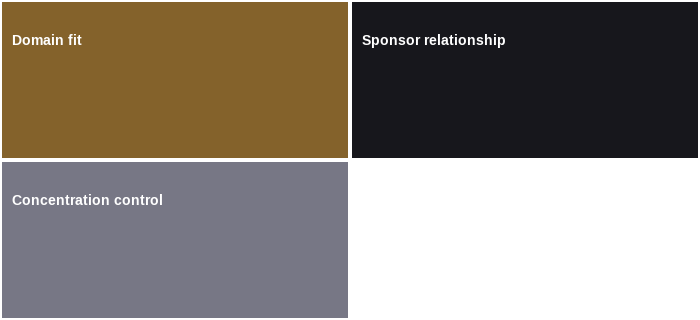
View chart data and assumptions
| Area | Treatment |
|---|---|
| Domain fit | Review area; no weighting implied |
| Sponsor relationship | Review area; no weighting implied |
| Concentration control | Review area; no weighting implied |
How Possible Loss and Existing Holdings Affect Size
In a $100 million private-markets portfolio, a 30% co-investment limit leaves $30 million for these deals. Three stakes of $10 million each would use that budget. Each company would still account for one-third of the programme.
Start with the loss the family could bear without changing its wider plans. Stakes held through funds and other vehicles already use some of that capacity. The room left for a new company stake may be smaller than the amount on offer.
How the Team Works Within the Deadline
A 10-business-day review with two committee meetings leaves about five business days between decisions. Unassigned legal and business questions can use up that window. Each needs an owner early in the process.
The team must assess the company and its share terms alongside legal rules, combined holdings and cash needs. Giving each task an owner lets the work move together. If facts are missing, the committee needs to know whether more time could resolve the gap or whether it defeats the case.
Company Quality and Security Terms Both Shape the Deal
Carta's median later-stage tender in the first half of 2025 was $27.6 million. Even in a deal that size, one buyer may receive a narrow set of rights. The total sale value says little about that buyer's claim.
Entry price and later dilution shape the stake the family keeps. Preferred and senior claims then set how much cash reaches it. Rights to reports and votes help it follow the company. Transfer and pro rata rights shape its choices when another round arrives.
The lead's own cheque and plans for staying involved show what support the family can expect. SPV fees or carry pay for a stated set of services and rights. Compare those with the charges to judge their value.
What Continues After Closing
After closing, reports help the family follow company progress and changes in value. Tax forms and later funding rounds bring more deadlines and choices. The team therefore needs time for the holding long after the first cheque.
A shared record of cost, current value and total stake makes the holding easier to follow. It joins the picture when cash moves through several vehicles or teams keep their own records.
Use the family office deal checklist to review one company. The wider family office venture guide then shows how that choice fits the full plan.
Stripe: selective participation beside large institutions
Stripe's 2023 Series I brought MSD Partners into a large group of buyers. It joined venture firms, sovereign investors and wealth-management capital in backing one company. The round shows how families can take part in a broader syndicate.
The round established a $50 billion valuation for Stripe.
Stripe said it did not need the cash to run the business. The deal mainly let shareholders sell.
Both existing and new investors could join the round. Their money did not fund a normal raise for business operations.
The group gained access to one company, but each buyer had its own choice to make. Price and share terms set what it bought. Existing holdings and cash needs then shaped the stake it could afford, including any later funding.
Primary source: Stripe's Series I and share sale (2023). This case uses the public deal record. It is not a Frontierspace result.
Frequently Asked Questions
Do co-investments replace venture fund commitments for family offices?
They usually work together. A fund manager chooses a group of companies, while a co-investment lets the family pick one itself. That added choice brings risk from one holding and calls for a separate review.
What governance does a family office need for co-investments?
Give the review a decision owner and a limit on company risk. The business and share terms then show whether the deal fits those limits. Once it closes, someone must keep checking reports and decide how to handle later funding.