How Does Option-Pool Expansion Affect Venture Returns?
A larger pool adds shares to the fully diluted count, reducing each current holder's percentage. Reserving those shares brings no cash into the company. It can still reduce the holder's part of an exit, making pool size part of the price paid for a stake.
A growing company often needs equity to hire staff. The hiring plan sets how much it may use, while deal terms set when the shares enter the count. Together, they shape the stake left to earn the investor's return.
Carta's 2025 private-market review put median dilution at about 16% per round from seed through Series C. That is a funding-round benchmark, not a measured pool increase. The cap table shows how the new cash and pool changes each affect the stake.
The Pool Changes the Financing Price
Suppose an investor owns 5% before a round. A pool increase borne by current holders reduces that stake before the new cash arrives. The headline pre-money value may stay the same, but dividing it among more shares lowers the price per share.
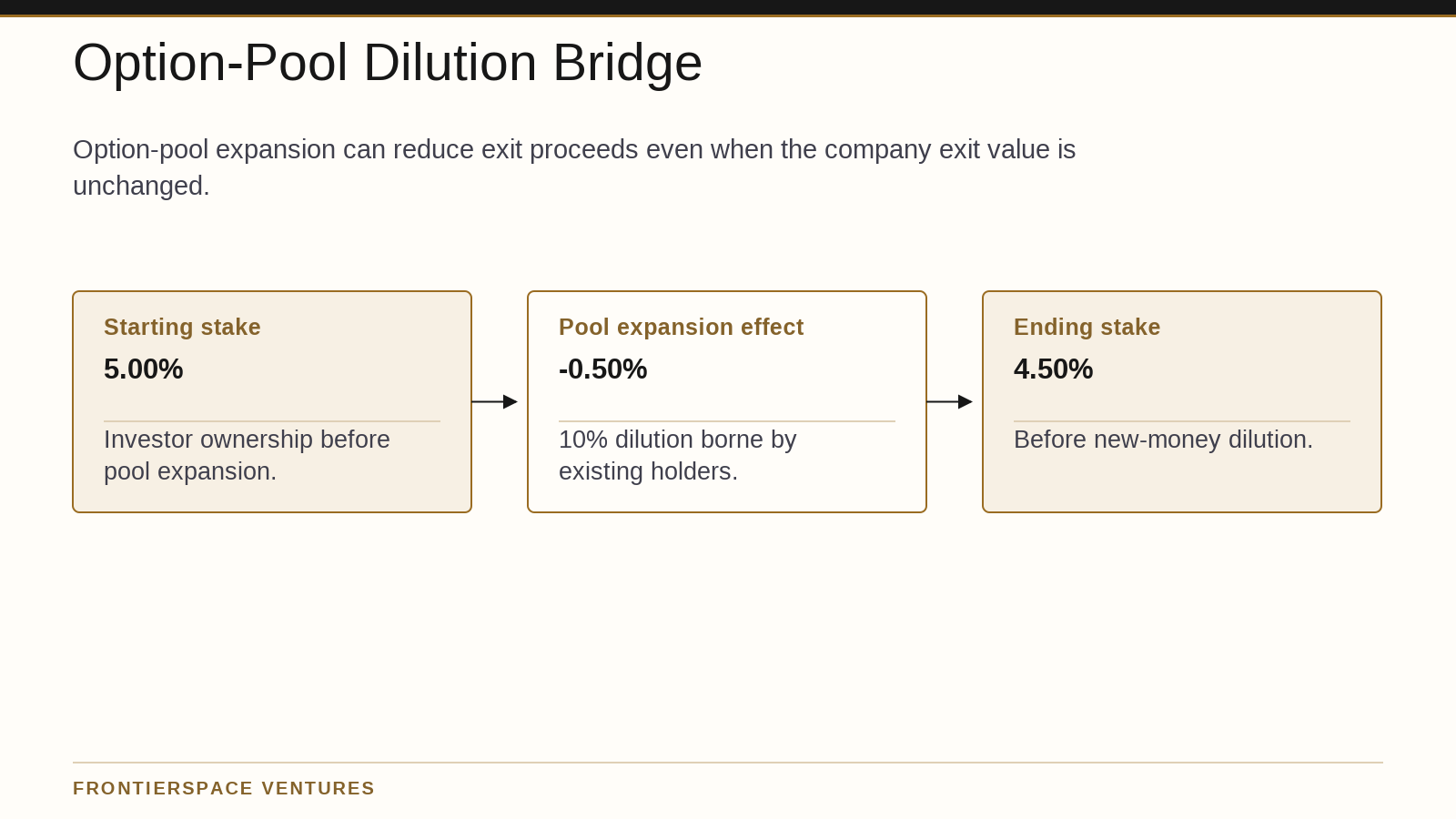
Start with a 5.0% stake and add pool shares equal to 10% of the total after expansion. If current holders bear that change, the stake falls to 4.5%: 5.0% times 90%. The business has not changed; the investor owns a smaller part of it.
Adding the pool before or after the new cash arrives changes who bears the dilution:
| Treatment | When new pool shares are counted | Who bears more of the dilution | What to check |
|---|---|---|---|
| Pre-money increase | Before the investor's ownership is calculated | Founders and existing holders | Whether the quoted valuation includes the enlarged fully diluted share count |
| Post-money increase | After the new investor buys shares | All holders, including the new investor | How the documents allocate future pool top-ups |
| No immediate increase | Pool stays at its current level | No new dilution at closing | Whether the remaining pool is enough for the hiring plan |
What Does the Ownership Loss Cost?
Half a percentage point can look small. Applied to a large exit, it can mean a sizeable loss of proceeds.
At a $3 billion exit, a 5.0% stake represents $150 million before preferences and costs. A 4.5% stake represents $135 million. The pool expansion has reduced gross proceeds by $15 million even though the company reached the same exit value.
Using Carta's 2025 median as an example, assume the new cash dilutes holders by 16% after the pool increase. The 4.5% stake then falls to about 3.78% before pro rata purchases or another top-up. Each step acts on the stake left by the last.
The Hiring Plan Behind the Percentage
A 10%, 15% or 20% pool needs a hiring plan behind it. Roles, grant sizes and start dates explain the demand for shares. Hiring three senior executives calls for a different plan from doubling the workforce.
The stated pool can include awards already granted or promised. A 12% plan may have only 3% unused after signed offers and refresh grants. The gap between that 3% balance and planned hiring explains the proposed top-up.
A buffer can cover hires that do not follow the plan exactly. Without a clear reason, extra pool shares dilute holders before the company has shown how those shares help it reach the next goal.
The Pool Can Grow Again
The cap table keeps changing after closing. New hires, promotions and retention grants use the pool. Grants to staff joining through an acquisition may use it too. A further top-up before exit can leave less ownership than a model of only the first increase suggests.
Too small a pool has a cost too: the firm may struggle to hire or keep the team needed for its next round. Size it against a credible operating plan, then carry the expected dilution through the return model. Oversight of later grants helps keep the pool tied to that purpose.
Questions for the Cap-Table Review
- Share count: Granted and unused options, warrants and convertibles may count on a fully diluted basis. The deal's rules set how each is treated.
- Spare pool shares: Shares already promised cannot also fund new grants.
- Hiring plan: Roles needed over the next 12 to 24 months show how the company expects to use the shares.
- Timing: Adding the pool pre-money or post-money changes who gives up part of their stake.
- Later changes: A further pool top-up can shrink the stake again before sale.
Pool size belongs in the price discussion because it changes the stake bought. Hiring needs, timing and later top-ups show the cost. The business progress those hires support then helps decide whether that cost is worthwhile.
If new pool shares make up ten percent of the total after expansion, a five percent stake falls to four and a half percent. This assumes current holders bear the change.
Option-Pool Dilution Bridge
A pool increase can leave the investor with less sale cash even when the company sells for the same price.
View dilution data and assumptions
| Step | Ownership | Assumption |
|---|---|---|
| Starting stake | 5.00% | Investor ownership before pool expansion. |
| Pool expansion effect | -0.50% | 10% dilution borne by existing holders. |
| Ending stake | 4.50% | Before new-money dilution. |
The Pool's Effect Through to Exit
The chart shows the first change in ownership. Later rounds, pool top-ups or a choice not to buy more can reduce it further. Following those steps shows both the stake left and the cash needed to protect it.
The stake left after hiring and later rounds sets what the entry price can earn. It also guides reserves, pro rata choices and early sales. Each changes how much company risk the fund retains.
Frequently Asked Questions
Is an option-pool increase bad for investors?
Giving up some ownership can pay off. The pool needs to help hire a team that adds more value than the stake given up.
What should investors ask?
Start with who bears the dilution. Adding shares pre-money, post-money or under another agreed split can leave each holder with a different stake.